Twilight of a Crane - Yu Zuwa Junji Kinoshita
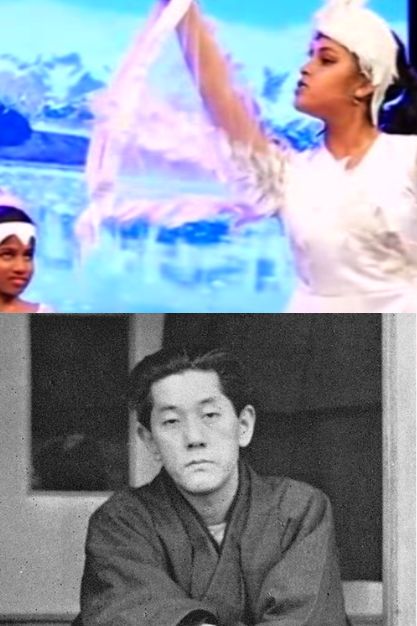
Yu Zuwa Junji Kinoshita’s “Twilight of a Crane” is a deeply emotional play that explores the conflict between love, purity, and human greed. It tells the tragic story of Tsu, a crane who transforms into a woman to live with Yohyo, the man who once saved her. Their love is gentle and innocent, built on kindness and gratitude, until two traders, Unzu and Sodo, tempt Yohyo with the promise of wealth. Blinded by greed, he asks Tsu to weave more cloth from her own feathers, unaware that each thread causes her great pain. When her true identity is revealed, Tsu flies away in sorrow, leaving Yohyo heartbroken and full of regret. Through this touching story, Kinoshita portrays how material desire can destroy the beauty of true love, and how selfishness can tear apart the bond between human and nature. The play is filled with symbolism, emotion, and vivid imagery, showing the fragility of love in a world corrupted by greed. Its tone moves from tender and peaceful to tragic and mournful, leaving a lasting impression of loss, compassion, and the cost of human desire.
- 💭 Theme: The main themes are love, sacrifice, and the destructive nature of greed. The play shows how material desire and human selfishness can destroy pure love and natural goodness.
- 🕊️ Symbolism: The crane stands for innocence, gratitude, and selfless love, while the cloth woven from her feathers represents sacrifice and suffering. The traders symbolize temptation and greed, and money reflects corruption that replaces true emotion.
- ⚡ Irony: Yohyo’s wish for happiness through wealth becomes the reason for his loss. His greed causes him to lose Tsu’s love — the one thing that truly made him happy.
- 🌸 Imagery: The image of Tsu weaving the cloth from her own feathers is both beautiful and heartbreaking, symbolizing the painful cost of love and devotion.
- 🔥 Conflict: The central conflict lies between love and greed — Tsu’s selfless affection clashing with Yohyo’s growing desire for wealth, leading to tragedy.
- 🎵 Tone: The tone shifts from warm and peaceful in the beginning to sad and tragic by the end, reflecting the emotional downfall of both characters.
- 💧 Pathos: The ending creates deep sympathy for both Tsu and Yohyo. Tsu’s silent pain and Yohyo’s regret stir the audience’s emotions, leaving behind a sense of loss and sorrow.
💫 Literary Devices in “Twilight of a Crane” by Yu Zuwa Junji Kinoshita
The Bear - Anton Chekhov
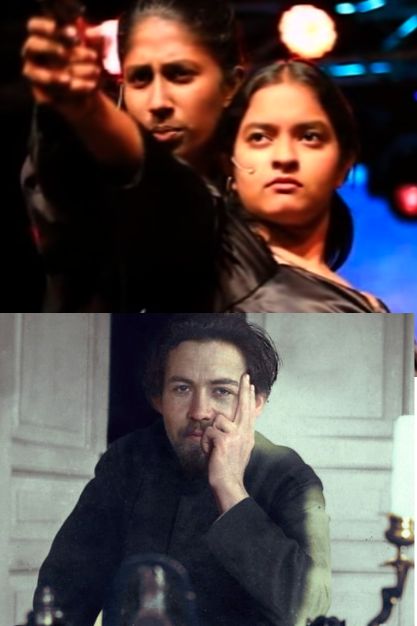
Anton Chekhov’s “The Bear” is a humorous one-act play that explores the absurdities of human emotions and relationships. It begins with Mrs. Popova, a young widow mourning her late husband, vowing eternal loyalty to his memory. Her quiet grief is interrupted by the arrival of Smirnov, a rough and outspoken man who comes to collect a debt her husband owed him. What starts as a business conversation quickly turns into a heated argument, as both characters clash in pride and anger. Their sharp exchanges reveal Chekhov’s skill in exposing the comedy hidden within human stubbornness and passion. Ironically, their furious confrontation soon turns into unexpected affection — Smirnov falls in love with Popova’s fiery spirit, and she, in turn, realizes her own emotions have come alive again. Through this sudden and surprising shift, Chekhov captures the unpredictability of love and the thin line between hatred and affection. The play’s tone moves from serious and dramatic to light-hearted and romantic, reflecting the chaos and comedy of real human nature.
- 💭 Theme: The play explores the irrational nature of human emotions, showing how pride, anger, and loneliness can lead to unexpected love. It also highlights the conflict between reason and passion, as two strong personalities discover affection through argument.
- 🎭 Characterization: Chekhov uses contrasting personalities — Popova’s false seriousness and Smirnov’s fiery temper — to create humor and reveal emotional depth beneath their stubborn behavior.
- ⚡ Irony: Popova, who swears never to love again, ends up falling for the man she quarrels with. Smirnov, who despises women, ends up confessing his love. This twist gives the play its comic charm.
- 😂 Satire: The play mocks society’s exaggerated ideas about love, mourning, and gender roles, showing how people can act foolishly while pretending to be serious.
- 🌸 Imagery: The lively description of their quarrel — Popova’s anger, Smirnov’s shouting, and the duel scene — adds visual energy and comic tension to the play.
- 🎵 Tone: The tone shifts from serious and dramatic to playful and romantic, mirroring the unpredictable swing of human emotion.
- 💘 Theme of Love and Hatred: Chekhov presents love and hate as two sides of the same emotion, showing how easily one can turn into the other.